Toronto paper plane game
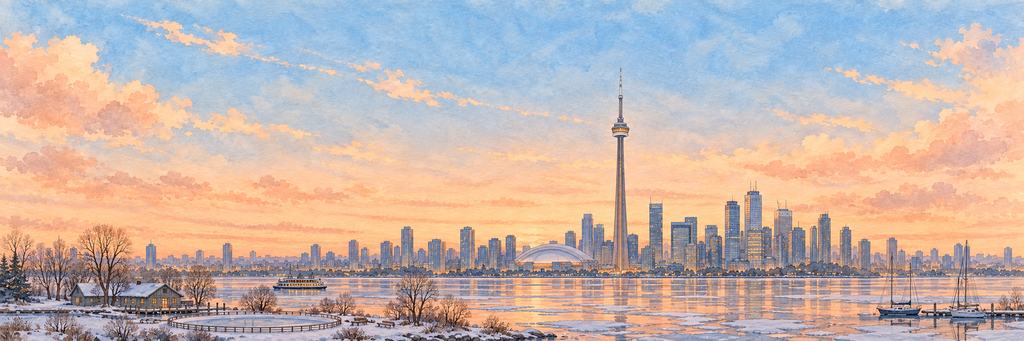
See the CN Tower reach into the clouds over Lake Ontario.
Tall towers, then open lake. Get past the goalie moose, then the raccoon.


Trees standing in the water
Toronto's name probably comes from the Mohawk word tkaronto, "where there are trees standing in the water". The British founded the town of York here in 1793, and it became the city of Toronto in 1834. Today it is Canada's largest city, and almost half of its people were born in another country.
“Half the city came from somewhere else. I'd ask them where.”
The landmarkThe CN Tower
The CN Tower was finished in 1976 to carry TV and radio signals over the city's new skyscrapers. At 553 metres it was the world's tallest free-standing structure for more than thirty years. Visitors can stand on its glass floor, 342 metres up, and look straight down.
Neighbourhoods
About 2.8 million people lived in the City of Toronto at the 2021 census, making it the fourth most populous city in North America. On 1 January 1998 the old city and five nearby municipalities were joined into one. Its hundreds of neighbourhoods include Greektown, Little Italy and two smaller Chinatowns. Kensington Market, a 27-hectare neighbourhood, has welcomed wave after wave of newcomers since the early 1900s and became a National Historic Site of Canada in 2006. To the east, the Distillery District has the largest group of Victorian industrial buildings in North America.
The lake
Toronto sits on a harbour on the north-western shore of Lake Ontario. Two rivers, the Humber in the west and the Don east of downtown, run through the city's network of ravines. Across the harbour lie the Toronto Islands, a chain of 15 small islands. They were once a peninsula, until a violent storm in April 1858 cut a channel through it. Public ferries leave from the Jack Layton Ferry Terminal, and private cars are not allowed on the islands.
The skyline
Toronto City Hall opened on 13 September 1965. Its design, by the architect Viljo Revell, won an international competition in 1958: two curved towers, 27 and 20 storeys tall, around a saucer-shaped council chamber. In front, Nathan Phillips Square holds the Toronto Sign and a reflecting pool used for ice skating.
When to see it
Come after dark. Since 2007 the CN Tower has been lit by 1,330 LED lights that can change colour, and its lighting changes on holidays and for major events.
Who keeps the wish in Toronto.
An Elite wakes first; the Boss guards the wish itself. Hit their weak points for a BONK!, land the last blow for a KO!, and each one grins and takes a bow.
-
The Elite
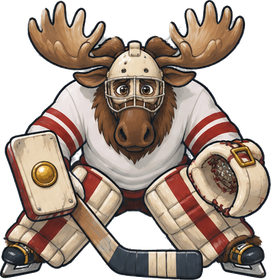
The Goalie Moose
Nothing gets past these antlers · Keeper of the outdoor rink
Every winter Toronto floods parks and squares to make outdoor ice rinks, and children learn to skate and play hockey on them. The moose is the tallest animal in North America: a big one stands over two metres at the shoulder and weighs up to 700 kilograms.
The moose crouches in its pads, taps its stick twice and whispers sorry in advance. The moose's antlers wobble, and it says sorry, though the plane hit it. The moose pulls off a glove, holds out a fist for a glove-tap, and gives a big wave.
“I'd bring my own puck and say sorry first.”
-
The Boss
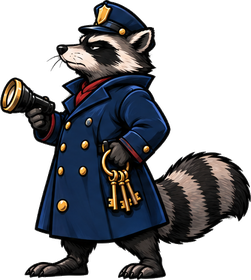
The Raccoon Night-Watchman
Opens every lid in the city · Keeper of the laneways
Toronto has so many raccoons that people call it the raccoon capital of the world. Their clever paws can open latches and lids. In 2016 the city gave out new green bins with locking lids, and some raccoons learned to open those too.
The raccoon clicks on its flashlight and jangles its keys. Someone is out after dark. The raccoon jumps, and its ring of keys jangles. The raccoon lifts a bin lid like a hat and bows.
“I'd keep my snacks in my pocket.”
Toronto cleared. The tower went right up into the clouds.
- The moose said sorry every time I hit it. I said sorry back.
- The raccoon checked every bin on the way. Just doing its job.
The plane reaches Toronto from New York.