
The Raccoon Night-Watchman
Opens every lid in the city · Keeper of the laneways
Toronto has so many raccoons that people call it the raccoon capital of the world. When the city gave out locking green bins in 2016, some raccoons learned to open those too.

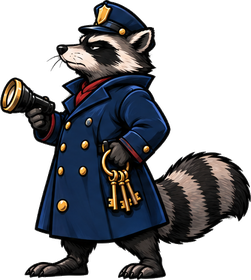
The legend
Toronto has so many raccoons that people call it the raccoon capital of the world. Their clever paws can open latches and lids. In 2016 the city gave out new green bins with locking lids, and some raccoons learned to open those too.
“I'd keep my snacks in my pocket.”
Where it comes from
The keeper is inspired by Toronto's raccoons, which do most of their rounds at night. Their scientific name, Procyon lotor, ends in the Latin word for "washer", because they dab and rub their food in water. About two-thirds of the part of a raccoon's brain that handles the senses deals with touch, more than in any other animal studied. In tests they have remembered how to solve a task for at least three years.
City life has changed them. A Toronto raccoon usually keeps to an area of about three city blocks, while a country raccoon may range over 20 square miles, about 50 square kilometres. Suzanne MacDonald, who studies animal behaviour at York University, found that city raccoons keep trying at a problem until they solve it, while country raccoons give up sooner on a plan that is not working. Toronto spent 31 million Canadian dollars on its green bins, and some raccoons got round the locks by knocking the bins over. In the wild, most raccoons live only two to three years.
Where to see it
Look at dusk or after dark, in back lanes, gardens and parks. Toronto has more than 2,400 public laneways, about 250 kilometres of them, running behind houses and shops.
In the game
The raccoon clicks on its flashlight and jangles its keys. Someone is out after dark. The raccoon jumps, and its ring of keys jangles. The raccoon lifts a bin lid like a hat and bows.