
Cairo paper plane game
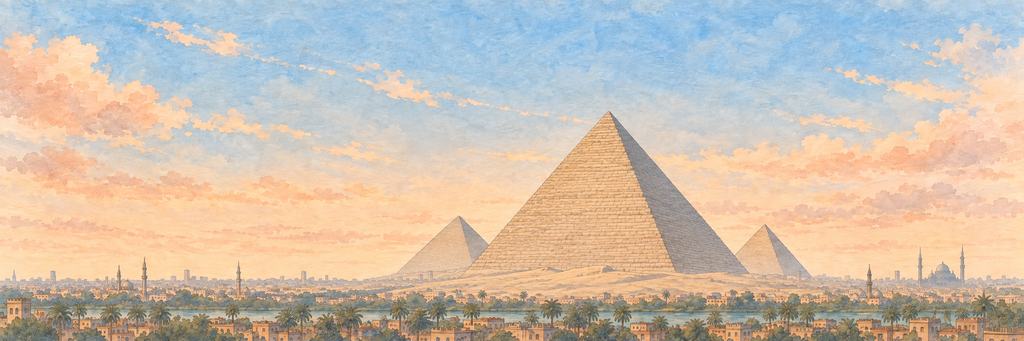
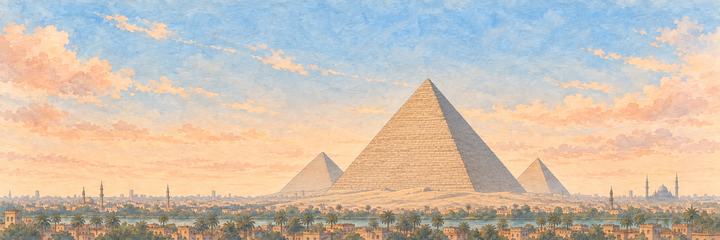
Fly over the pyramids, older than any story I know.
Save fuel for the open desert. Get past the camel, then the Sphinx.


The Victorious
The Fatimids founded Cairo in 969 and named it al-Qahira, "the Victorious". It grew beside older towns on the Nile, just where the river valley opens into the wide delta, and became one of the largest cities in Africa.
“I'd follow the Nile to where the delta begins.”
The landmarkThe Great Pyramid of Giza
The Great Pyramid was built for King Khufu about 4,500 years ago from an estimated 2.3 million stone blocks. At about 146 metres it stayed the tallest structure people had built for some 3,800 years. It is the last of the Seven Wonders of the Ancient World still standing.
Neighbourhoods
Greater Cairo is home to about 22 million people, the largest urban area in the Arab world. Its oldest streets form Historic Cairo, a UNESCO World Heritage Site since 1979. The area is full of mosques, schools and old merchant inns, which is why it is called "the city of a thousand minarets". To the south, Coptic Cairo grew up around the Roman fortress of Babylon. Its Hanging Church takes its name from the way it sits over one of the fortress gates. On the island of Gezira, the district of Zamalek is known for its early 20th-century villas, Art Deco flats and embassies.
The river
The Nile flows north through the middle of the city, around the islands of Gezira and Roda. On Roda Island stands the Nilometer, built to measure how high the river rose in each yearly flood. The one that stands today goes back to 861. Four bronze lions guard the ends of the Qasr el-Nil Bridge, which opened in 1933. Below the bridges, feluccas, the old wooden sailing boats of the Nile, still take people out on the water.
The skyline
High on the Citadel, the Mosque of Muhammad Ali has a great dome and two slim minarets. It was built mostly between 1830 and 1848, and its walls are faced with alabaster. On Gezira, the 187-metre Cairo Tower opened in 1961. Its open concrete lattice is meant to look like a lotus plant, and it was the tallest structure in Egypt until 1998.
When to see it
Go up the Cairo Tower just before sunset. On a clear day you can see the pyramids of Giza in the distance.
Who keeps the wish in Cairo.
An Elite wakes first; the Boss guards the wish itself. Hit their weak points for a BONK!, land the last blow for a KO!, and each one grins and takes a bow.
-
The Elite
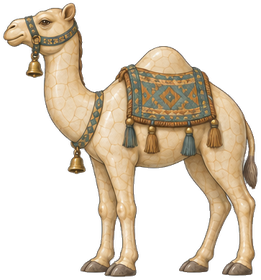
The Camel
Chews slowly, thinks slowly · Keeper of the Desert Road
The camels that carry visitors around Giza today are newcomers there. When the pyramids rose, some 4,500 years ago, donkeys carried the builders' loads and boats moved the stone. Camels became common in Egypt, most historians think, only about two thousand years later, spreading with Assyrian, Persian and Greek rulers.
The camel looks up from chewing. The camel grumbles, shifts its feet and goes on chewing. The camel folds its legs and sits down, very slowly.
“I'd ride one right up to the pyramids.”
-
The Boss
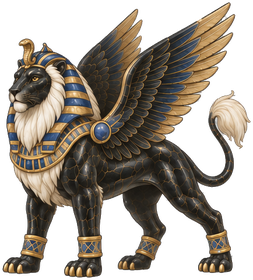
The Sphinx
Dozing for 4,500 years · Keeper of Giza
Carved from a single ridge of Giza's bedrock some 4,500 years ago, most likely for King Khafre, the Great Sphinx spent centuries buried to its shoulders in sand. A stone tablet between its paws tells how young Prince Thutmose dreamed it promised him the throne if he dug it free. He did, and became king.
The Sphinx shakes the sand out of its wings. The Sphinx ruffles one wing and narrows its eyes. The Sphinx folds its wings, bows and settles into the sand.
“I'd ask him a riddle back.”
Guards a relic: the Scarab Amulet. A gold scarab amulet from Cairo's old treasures, guarded by the Sphinx beside the desert road. It carries you further down that road.
Cairo cleared. The pyramids were so big they looked close even when they weren't.
- The camel didn't hurry. Not even at the end.
- The Sphinx looked like it was keeping a secret.
The plane reaches Cairo from Paris. Clear it and the map opens the way to Rome. Its own plane look is Fine Sand, a trail look.