
The Camel
Chews slowly, thinks slowly · Keeper of the Desert Road
When the pyramids rose, donkeys and boats did the carrying. Camels became common in Egypt, most historians think, only about two thousand years later.
The legend
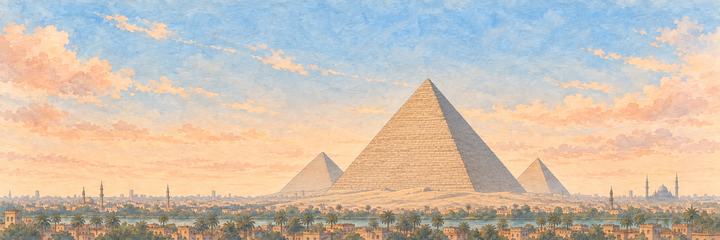
The camels that carry visitors around Giza today are newcomers there. When the pyramids rose, some 4,500 years ago, donkeys carried the builders' loads and boats moved the stone. Camels became common in Egypt, most historians think, only about two thousand years later, spreading with Assyrian, Persian and Greek rulers.
“I'd ride one right up to the pyramids.”
Where it comes from
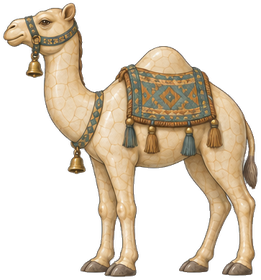
Egypt's camels are dromedaries, the one-humped camel, first tamed in the south of the Arabian Peninsula. The hump holds no water. It is fat bound with fibrous tissue, up to 36 kilograms of it, which the animal burns when food runs short. A thirsty dromedary can drink up to 114 litres at one time, and it can survive losing more than 30% of its body water, which would kill most other mammals. Instead of sweating, it lets its body temperature swing between 31 and 41.7 °C over the day. Thick double eyelashes keep out sand, and it can close its nostrils at will. Camel caravans long crossed the Darb al-Arba'in, the Forty Days Road, from Darfur in Sudan to Asyut in Egypt.
Where to see it
Camels are still bought and sold at Birqash, in Giza just outside Cairo, one of the largest camel markets in Africa. Most come from Sudan, on a caravan of about 15 days followed by a truck ride. Up to 1,000 camels can change hands in a day, bought for riding at Giza and other tourist sites, for work or for meat. The market was once held in Imbaba, in Cairo itself, and moved out as the city grew. Friday morning is the busiest time. At the pyramids, camel drivers still offer rides across the Giza plateau.
In the game
The camel looks up from chewing. The camel grumbles, shifts its feet and goes on chewing. The camel folds its legs and sits down, very slowly.