Spain
Spain covers most of the Iberian Peninsula, between the Atlantic and the Mediterranean, and includes the Balearic and Canary Islands. It has more UNESCO World Heritage sites than almost any other country. Its flag is red and yellow.
“I'd like wings that spin like a sycamore seed.”
- In 1923 Juan de la Cierva flew his autogiro near Madrid, an aircraft held up by freely spinning blades like a sycamore seed.
- Teide, a volcano on Tenerife in the Canary Islands, is 3,715 metres high, the highest mountain in Spain.
The land
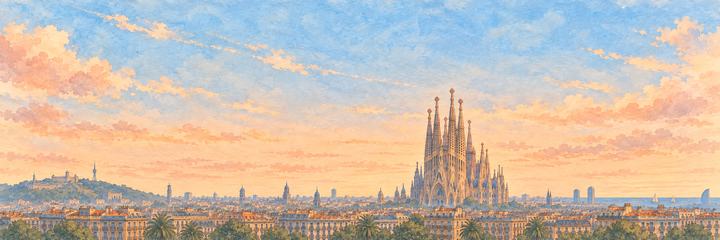
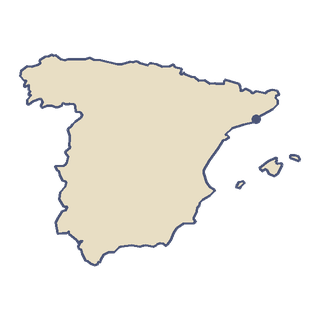
Much of the middle of Spain is a high plateau, the Meseta Central, mostly 600 to 800 metres above sea level. The Tagus is the longest river on the Iberian Peninsula. It runs about 1,007 km from the mountains of Teruel, past Toledo, to the Atlantic at Lisbon in Portugal. Spain also includes two cities in North Africa, Ceuta and Melilla. In Catalonia, around Barcelona, Catalan is an official language alongside Spanish.
Getting around
Spain's first high-speed line, from Madrid to Seville, opened in April 1992 for the Expo held in Seville that year. The network now covers about 3,970 km, the longest in Europe and the second longest in the world after China's. Since 2008, high-speed trains have linked Madrid and Barcelona, covering 621 km in 2 hours 30 minutes without stops.
Food
Paella comes from the Valencia region, south of Catalonia. Its name is the Valencian and Catalan word for frying pan, after the wide, shallow pan it is cooked in. The crisp layer of rice at the bottom is called socarrat. In Barcelona a simple everyday dish is pa amb tomàquet: bread rubbed with fresh tomato, then olive oil and salt. Spain produces more olive oil than any other country, most of it in Andalusia.
Visitors
In 2025 Spain had about 97 million foreign visitors, the second most of any country. In 2024 Barcelona was its second most visited city, after Madrid.