Germany
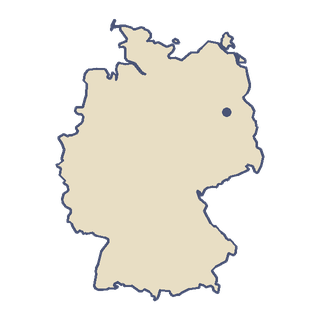
Germany lies in the middle of Europe, with the North Sea and the Baltic Sea to the north and the Alps to the south. It shares borders with nine countries. Its flag has black, red and gold stripes.
“I'd jump off Lilienthal's hill with my plane.”
- In 1894 Otto Lilienthal built his own hill in Lichterfelde, near Berlin, to launch his gliders from. He made more than a thousand glider flights.
- On 2 July 1900 the first Zeppelin airship, LZ 1, rose over Lake Constance in southern Germany.
The land
Germany covers about 357,600 km². Its northern third is part of the North European Plain, flat land where the rivers run north to the North Sea and the Baltic. In Schleswig-Holstein, in the far north, the land dips to 3.54 metres below sea level. In the south, the Zugspitze in the Bavarian Alps rises to 2,962 metres, the highest point in the country. The Rhine flows for 865 km through Germany, and the Danube begins in the south-west and runs south-east towards the Black Sea. Forests cover about 31 percent of the land.
Getting around
Germany's first steam railway opened on 7 December 1835. It ran 6 km from Nuremberg to Fürth, pulled by a locomotive called Adler, the eagle. Berlin's main station opened in May 2006. Its trains cross on two levels: the east–west lines run on the upper level and the north–south lines on the lower one.
Bread and books
Germany bakes about 3,200 kinds of bread, and in 2014 its bread culture was added to the country's own list of living heritage. Supper is often called Abendbrot, "evening bread". In Mainz, Johannes Gutenberg had a printing press with movable type working by 1450. In 1455 he finished his Bible, and 48 nearly complete copies survive.
The capital
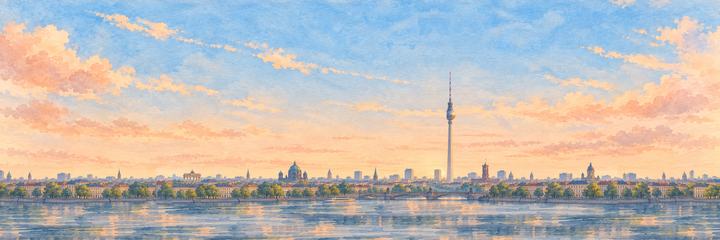
After the two parts of Germany were reunited on 3 October 1990, Berlin became the capital of the whole country again. Since 19 April 1999 the parliament, the Bundestag, has met in the rebuilt Reichstag building, under a glass dome that visitors can walk up inside after booking.