
The Cable Car
Hangs on by one wire · Keeper of Sugarloaf
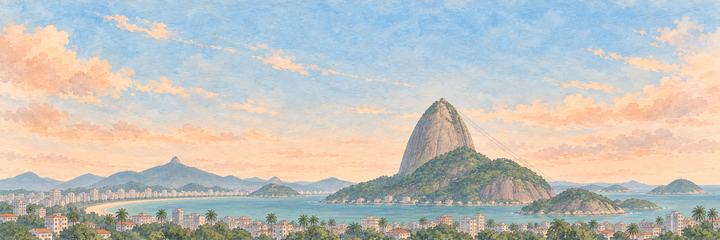
The Sugarloaf cable car opened in 1912, one of the first passenger cableways in the world. Its first cars were wooden and carried 22 people above Guanabara Bay.
The legend
When it opened in 1912, the Sugarloaf cable car was, by most counts, only the third passenger cableway in the world, after ones in Spain and Switzerland. Engineer Augusto Ferreira Ramos dreamed it up in 1908. Its first cars were wooden, like Rio's trams, and carried 22 people through the air above Guanabara Bay.
“I'd sit by the window and never blink.”
Where it comes from
The Sugarloaf cable car climbs in two stages. The first runs from Praia Vermelha to the Morro da Urca, a hill 220 metres high; about 577 people rode it on its first day. The second, from Urca to the 396-metre summit of Sugarloaf, opened in January 1913. The mountain's name may come from its shape: in the 16th century, Portuguese settlers shipped sugar in cone-shaped clay moulds.
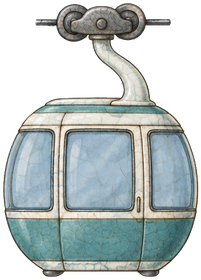
In 1951 one of the two cables snapped, leaving 22 people hanging from the other. A mechanic built an emergency car to reach them, and the rescue took about 10 hours. In 1972 bubble-shaped cars with clear sides raised capacity from 115 to 1,360 passengers an hour. Their Swiss-made successors arrived in 2008, keeping the same shape. In 1979 the cableway appeared in the James Bond film Moonraker.
Where to see it
The lower station is at Praia Vermelha, at Avenida Pasteur 520 in Urca. Each stage takes about 3 minutes in glass-walled cars that hold 65 people. Over its history the park has welcomed more than 50 million visitors. Instead of riding the first stage, people can walk up the Morro da Urca on a trail of about 25 to 40 minutes. Sugarloaf, Urca and the nearby Babilônia hill hold more than 270 climbing routes, one of the largest climbing areas in any city.
In the game
The cable car sways on its wire. The cable car swings hard and rattles on its wire. The cable car stops swinging and hangs still.