
The Lyrebird
The great mimic · Keeper of the forest's songs
The superb lyrebird can copy almost any sound it hears, even camera shutters and chainsaws. Its tail has been on Australia's ten-cent coin since 1966.

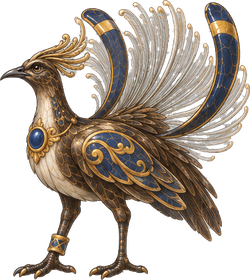
The legend
The superb lyrebird can copy almost any sound it hears: other birds, camera shutters, even chainsaws. It lives in the forests around Sydney, and its lyre-shaped tail has been on Australia's ten-cent coin since 1966.
“I'd ask it to sing my plane back to me.”
Where it comes from
The superb lyrebird, Menura novaehollandiae, is a ground-dwelling songbird. Males reach about 1 metre long, and their 16 tail feathers can be 70 centimetres. The name comes from the male's two broad outer tail feathers, which curve like a lyre. A taxidermist at the British Museum who had never seen a live bird set the tail in that lyre shape, and the painter John Gould worked from his specimen.
Lyrebird fossils at the Australian Museum are about 15 million years old. Birds can live for up to 30 years, and an estimated 70 to 80 per cent of a male's song is borrowed from other species. As they scratch for food, lyrebirds can turn over up to 200 tonnes of leaf litter and soil per hectare each year. One story says a pet lyrebird in the 1930s learned tunes from a neighbour's flute and kept singing them after it was set free; researchers still argue over whether it is true.
Where to see it
Many superb lyrebirds live in the Royal National Park and the Illawarra region just south of Sydney. Winter is the season to listen. From June to August the males build mounds of bare earth on the forest floor, then sing and dance on them for females, sometimes for about four hours a day.
In the game
The lyrebird fans its silver tail and starts copying the plane's hum. The lyrebird skips a note, then sings on. The lyrebird folds its tail, bows and goes quiet.