
Karagöz
Always has the last word · Keeper of the Golden Horn
Karagöz is the loud, plain-spoken hero of Turkish shadow theatre. He argues with his learned friend Hacivat and usually gets the last laugh.
The legend
Karagöz is the loud, plain-spoken hero of Turkish shadow theatre. In every play he argues with his learned friend Hacivat, and he usually gets the last laugh. In 2009 the Karagöz tradition joined UNESCO's list of the world's living heritage.
“I'd let him have the last word.”
Where it comes from
Nobody knows exactly when shadow theatre reached the Ottoman lands. One theory says it came from the shadow puppets of Java, carried west by traders. The story goes that Karagöz and Hacivat were two real builders working on a mosque in Bursa in the 14th century, and that their talk kept the other workers from their jobs, so the ruler had them put to death. The first recorded play was staged for Sultan Selim I in Egypt, after he conquered it in 1517.
The puppets are cut from animal hide, the best ones from camel skin, worked until light shines through, then coloured and oiled. They stand about 35 to 40 centimetres tall, with joints of waxed thread, and are moved on rods against a white cotton screen lit from behind. One puppeteer, the hayalî, speaks every voice. For centuries the shows filled coffeehouses, gardens and squares during Ramadan, and were put on at circumcision feasts.
Where to see it
Today Karagöz is staged mostly in theatres, schools and shopping centres. In Istanbul, the International Istanbul Puppet Festival has been held each autumn since 1998. Its art director, Cengiz Özek, stages new Karagöz plays: in 2024 the programme included his "The Donkey Karagöz" and a Karagöz version of Shakespeare's "The Merchant of Venice".
In the game
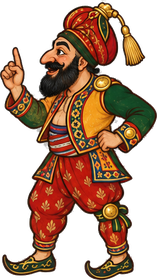
Karagöz raises one finger, clears his throat and starts to argue with the plane. Karagöz staggers, grabs his hat and keeps talking. Karagöz stops talking at last, sweeps off his hat and bows low.