
The Pearl Diver
Dives on a single breath · Keeper of the Gulf
Before oil, pearls were Dubai's main trade. Divers clipped their noses shut and gathered oysters on a single breath.
The legend
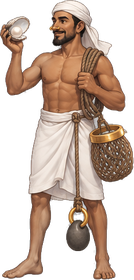
Before oil, pearls were Dubai's main trade. Every summer the boats sailed out for months. A diver clipped his nose shut, sank fast with a stone weight and filled a rope basket with oysters on one breath, while a puller on deck hauled him back up by rope.
“I'd hold my breath and count with him.”
Where it comes from
In 1590 the Venetian pearl merchant Gasparo Balbi named "Dibai" for the quality of its pearls. The main season, Ghous Al Kabir or "the big dive", ran from 1 June to 30 September, with shorter one-month seasons in October and November.
Each boat carried a crew with set jobs. The nukhadha ran the boat and shared out the profits. The seib worked the ropes, helped by boys called tabbab, aged about 10 to 14. The naham was a singer who kept spirits up at sea. A diver's nose clip, the fettam, was made of turtle shell or sheep's bone, and he could dive up to 200 times a day. When the fleet came home, families hung cloth flags on their houses, made sweets and greeted the crews with songs.
The trade did well until the Great Depression of 1929. Artificial pearls and falling demand then ruined it, bringing hard years in the 1930s.
Where to see it
Al Shindagha Museum, on Dubai Creek, opened in 2023 across more than 80 restored houses, the largest open-air heritage museum in the UAE. Its Culture of the Sea pavilion covers pearl diving and dhow building. In Al Ras, in Deira, the Al Ahmadiya School was founded in 1912 by the pearl merchant Sheikh Ahmed bin Dalmouk. It has been a museum since 2000, but Dubai Culture lists it as under renovation, so check before going.
In the game
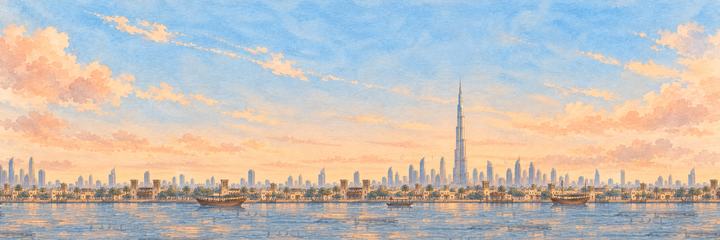
The pearl diver takes a long, slow breath, smiles and holds up his oyster so the pearl catches the light. The diver's stone weight swings, and he nearly drops his oyster. The diver laughs, tucks the pearl into his basket and waves the plane on toward the tower.