
The Windmill Giant
Turns with every north wind · Keeper of the dykes
For hundreds of years Dutch windmills pumped water out of low, wet land, so people could farm where there had been lakes.
The legend
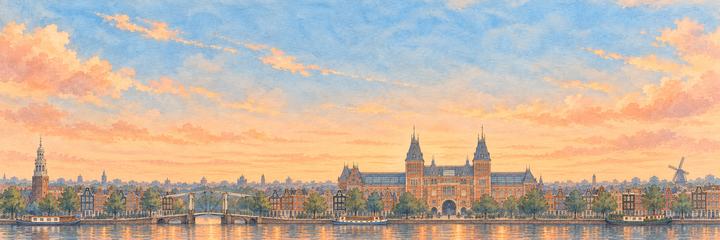
For hundreds of years Dutch windmills pumped water out of low, wet land, so people could live and farm where there had been lakes and marsh. Millers even sent messages with their sails: stopped just before the top meant joy. Amsterdam still has windmills inside the city, such as De Gooyer beside a canal.
“I'd climb up and ride a sail.”
Where it comes from
A polder is low land ringed by dykes, and the windmills that kept it dry are called polder mills. The first polders were built in the 11th century. The great age of draining came in the early 1600s, when the engineer Jan Leeghwater oversaw the mills that drained the Beemster lake, begun in 1607. The Purmer, Schermer and Heerhugowaard followed by 1635. The largest lake, the Haarlemmermeer, was too big for wind. It was finally pumped dry in 1852 by three steam pumping stations.
In the 17th century about 9,000 windmills stood across the country, and about 1,000 remain. Mills did more than pump water. A group of 23 sawmills along the Kostverlorenkade in Amsterdam has been called one of the world's first industrial estates. One of them, De Otter, still stands.
Where to see it
De Gooyer, on the Funenkade, was finished in 1814 on the stone base of an old watermill. At 26.6 metres it is the tallest wooden mill in the Netherlands. It is not open inside, but the Brouwerij 't IJ brewery sits next door in a former bathhouse from 1911. The Molen van Sloten, a working polder mill at Akersluis 10 in the west of the city, is open daily for guided tours. On National Mill Day each May, around 900 mills across the country open their doors.
In the game
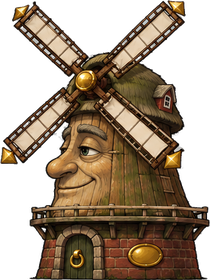
The windmill opens one sleepy eye, creaks, and his sails begin to turn. The windmill blinks, and his sails stutter. The windmill stops his sails just before the top, the millers' sign for joy, and tips his cap.